DirectFarmer: Agricultural Supply Chain Platform
Direct farmer-to-buyer marketplace removing intermediary margin layers
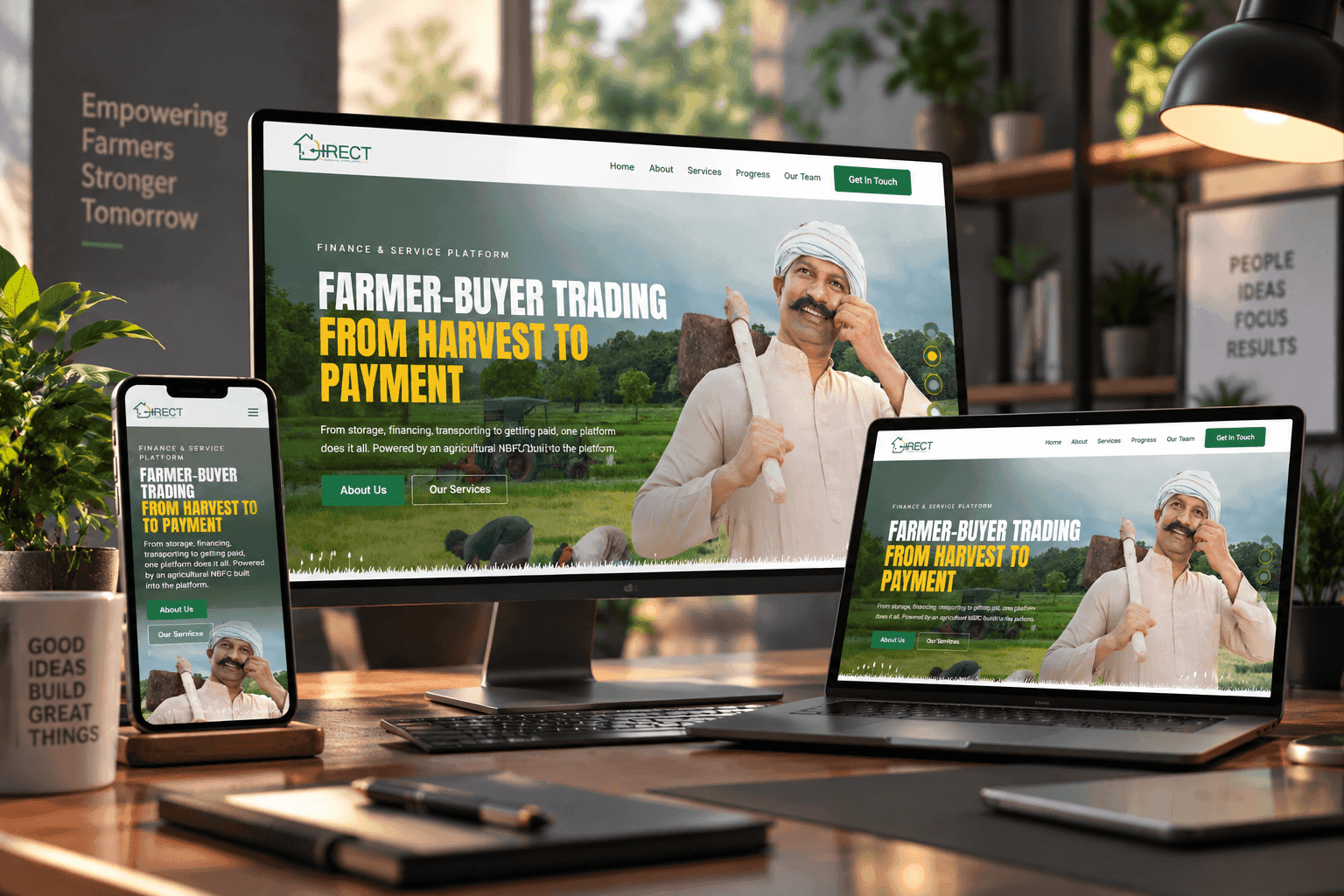
Background
DirectFarmer's mission was to connect smallholder farmers directly to institutional buyers and distributors, improving price discovery and reducing post-harvest losses caused by supply chain inefficiencies. In the existing supply chain, produce typically passed through several layers of intermediaries before reaching a buyer, each layer taking a margin and adding delay that mattered for perishable goods, while farmers had little visibility into what buyers were actually paying downstream.
What We Built
A digital marketplace platform based on the DirectFarmer Statement of Work. The platform covers farmer onboarding with vendor registration and due diligence documentation, produce catalogue management, buyer browsing and order placement, order fulfilment workflows, and delivery tracking, built so a farmer can list produce and a buyer can place an order without either side going through a broker.
Architecture
NestJS API with Angular frontend and MongoDB. Vendor registration flow includes document upload and verification. Produce listings carry category, availability, and pricing fields that farmers control directly. Order state machine runs from placement through to delivery confirmation, giving both sides visibility into exactly where an order is at any point.
Results
Produce sold through several layers of intermediaries, each taking a margin
Farmers list and price produce directly to institutional buyers
No structured vetting before a supplier could sell on the platform
A blocking due-diligence step before any farmer's listings go live
Outcomes & Lessons Learned
- Direct farmer-to-buyer marketplace removing intermediary margin layers
- Produce catalogue with availability and pricing managed by farmers directly
- Order workflow covering placement, confirmation, fulfilment, and delivery tracking
- Vendor registration and onboarding workflow with due diligence documentation
The vendor due diligence step at onboarding, requiring farmers to upload registration documents before listings go live, was key to maintaining buyer trust in the platform's supply quality. Building this as a blocking prerequisite rather than an optional step reduced disputes downstream, since every listed farmer had already cleared the same bar.
Questions, answered.
The things people ask us about this project. If yours isn't here, ask us directly, we reply like humans.
Ask us anything→How are farmers vetted before they can sell on the platform?
Vendor registration includes document upload and verification as a blocking step, so a farmer's listings can't go live until due diligence has cleared, which is what maintains buyer trust in supply quality.
Who controls pricing and availability for produce listings?
Farmers manage their own catalogue directly, category, availability, and pricing, without going through a broker or intermediary layer.
What does the order process look like from a buyer's side?
A state machine takes an order from placement through confirmation, fulfilment, and delivery tracking, giving both farmer and buyer visibility into exactly where an order stands at any point.
Why require due diligence documentation before a farmer can list produce?
Making it a blocking prerequisite rather than an optional step reduced disputes downstream, since every farmer selling on the platform has already cleared the same verification bar.
What problem was this platform actually solving for farmers?
Produce typically passed through several layers of intermediaries before reaching a buyer, each taking a margin and adding delay that mattered for perishable goods; this platform lets farmers sell and price directly to institutional buyers instead.
Ready to craft tomorrow, today?
Where innovation meets execution, and ideas evolve into impactful solutions. Book a free consultation, no strings attached.